
7 Simple Home Organization Ideas That Actually Make a Difference
A more organized home doesn’t have to mean perfectly labeled containers, color-coded closets, or spending an entire weekend reorganizing everything you own.
The systems that make the biggest difference are usually much simpler. They give everyday things a natural place to land, make frequently used items easier to reach, and remove a few of those tiny frustrations that seem to pile up throughout the day.
At Mama Dove Living, that’s the kind of organization we love most: simple, practical, and beautiful enough to feel at home in your home.
These seven ideas aren’t about creating picture-perfect spaces. They’re about creating a home that works a little better for the people actually living in it.
1. Give Everyday Things a Landing Place
The things that create the most visible clutter are often the things we use every single day—keys, mail, bags, shoes, chargers, sunglasses, and all the little odds and ends that come through the door with us.
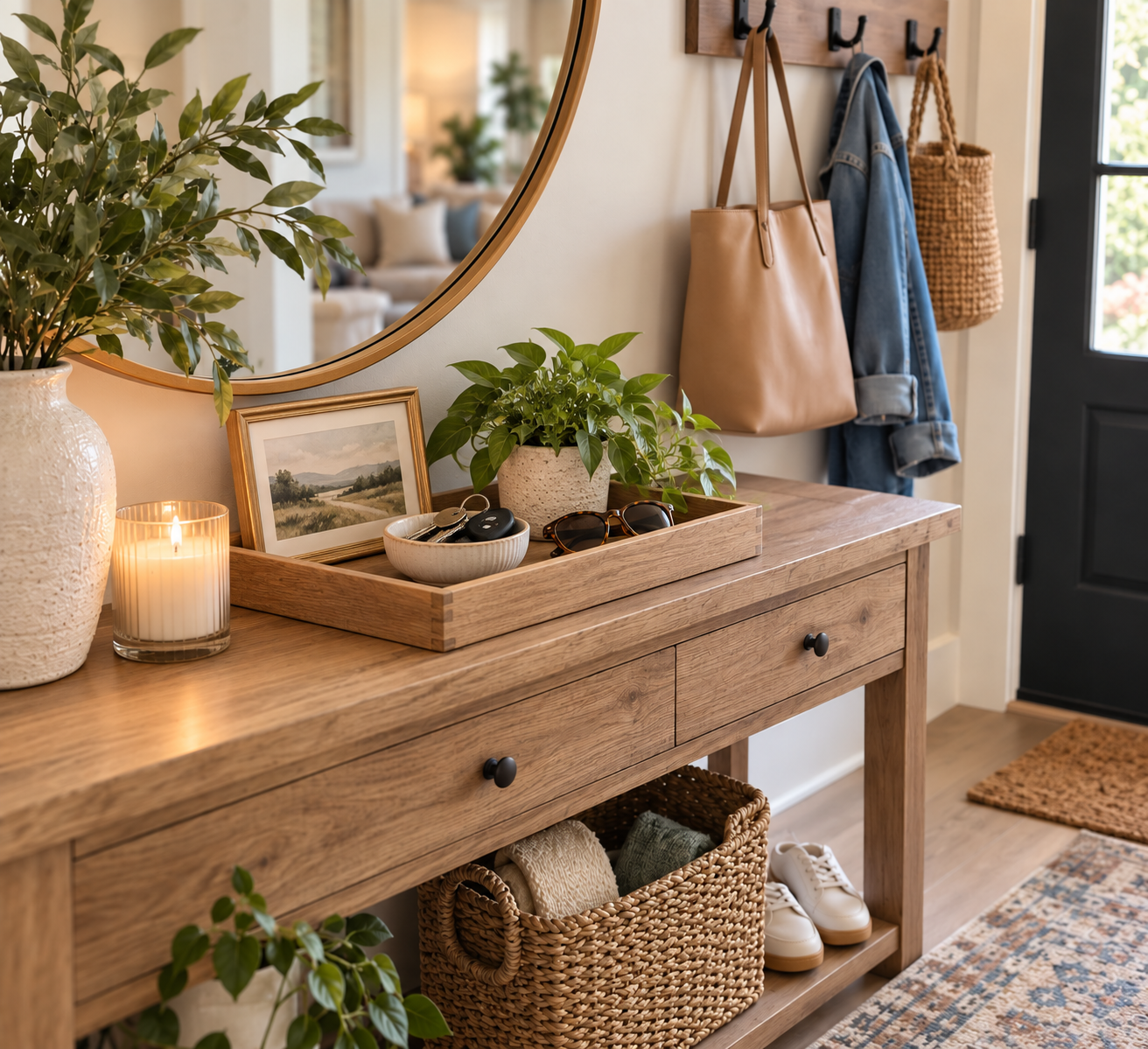
Instead of expecting everyone to put those things completely away each time, create an easy landing place close to where they naturally end up. A beautiful tray on an entry table can collect keys and sunglasses. A basket can hold shoes or bags. A small container can keep chargers from spreading across the kitchen counter.
The goal is to make putting something away almost as easy as putting it down.
When a system works with your family's natural habits instead of against them, you're much more likely to keep using it.
1. Give Everyday Things a Landing Place
The things that create the most visible clutter are often the things we use every single day—keys, mail, bags, shoes, chargers, sunglasses, and all the little odds and ends that come through the door with us.
Instead of expecting everyone to put those things completely away each time, create an easy landing place close to where they naturally end up. A beautiful tray on an entry table can collect keys and sunglasses. A basket can hold shoes or bags. A small container can keep chargers from spreading across the kitchen counter.
The goal is to make putting something away almost as easy as putting it down.
When a system works with your family's natural habits instead of against them, you're much more likely to keep using it.
2. Organize Where You Use It
One of the simplest ways to make a home easier to manage is to store things as close as possible to where you actually use them.
If you always need scissors in the kitchen, keep a pair there instead of across the house in an office drawer. Keep extra towels near the bathroom where they're used. Store everyday cleaning supplies close to the spaces you clean most often. Give the kids' things a home where they naturally play.
It sounds simple, but sometimes we organize according to where something seems like it should belong instead of where it actually makes our lives easier.
Let convenience help decide where things live.
A well-organized home doesn't necessarily mean everything is hidden away. It means you can find what you need, use it, and put it back without turning it into another task.
3. Make the Things You See Every Day Beautiful
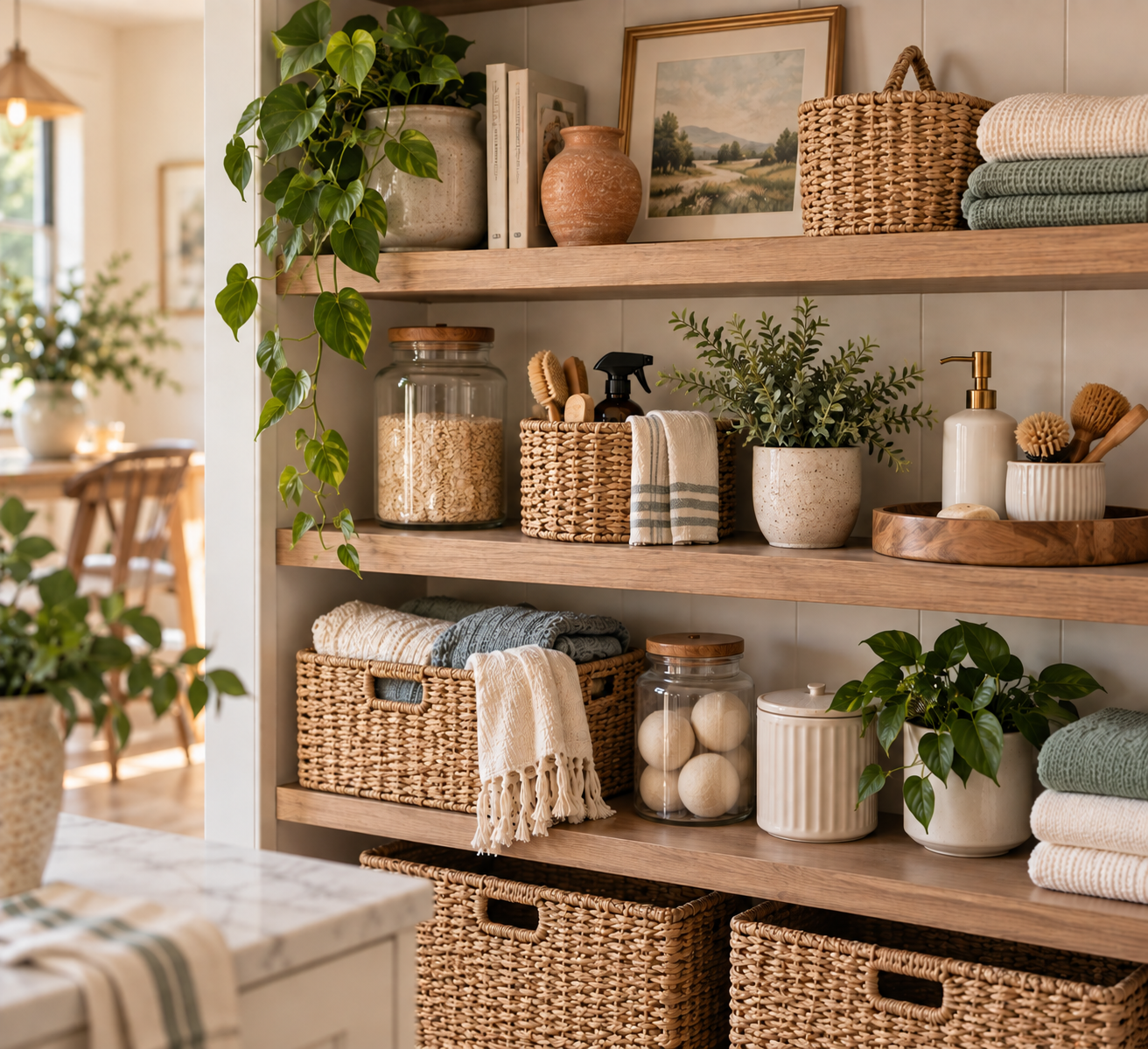
Organization doesn't always have to mean hiding everything behind a cabinet door. Some of the most useful things in our homes need to stay within easy reach—and that's where choosing beautiful versions of practical items can make such a difference.
A woven basket can hold everyday blankets. Glass or ceramic containers can organize frequently used kitchen essentials. A pretty tray can corral bottles beside the sink. Even something as simple as a beautiful laundry basket can make a hardworking space feel more intentional.
When practical things are attractive enough to leave out, organization becomes part of the room instead of something you have to hide.
This is one of the ideas at the heart of Mama Dove Living: your home can work hard for your family and still feel beautiful.
4. Stop Organizing for Your “Ideal” Self
It’s easy to create an organizing system based on how we wish we behaved instead of how we actually live.
Maybe the mail never makes it to the office. Maybe shoes are always kicked off by the same door. Maybe folded blankets never make it back into the closet. Those little patterns aren’t necessarily failures—they’re useful clues.
Instead of constantly fighting them, build your systems around what your family naturally does.
If blankets always end up beside the sofa, give them a beautiful basket there. If paperwork collects on the kitchen counter, create a small designated spot nearby. If toys migrate into the living room every day, give them storage that belongs in the living room.
The best organization system isn’t the one that looks perfect when you finish setting it up. It’s the one your family can still use on a busy Tuesday.
5. Make the Easiest Choice the Organized Choice
If an organizing system takes too many steps, chances are it won’t survive real life.
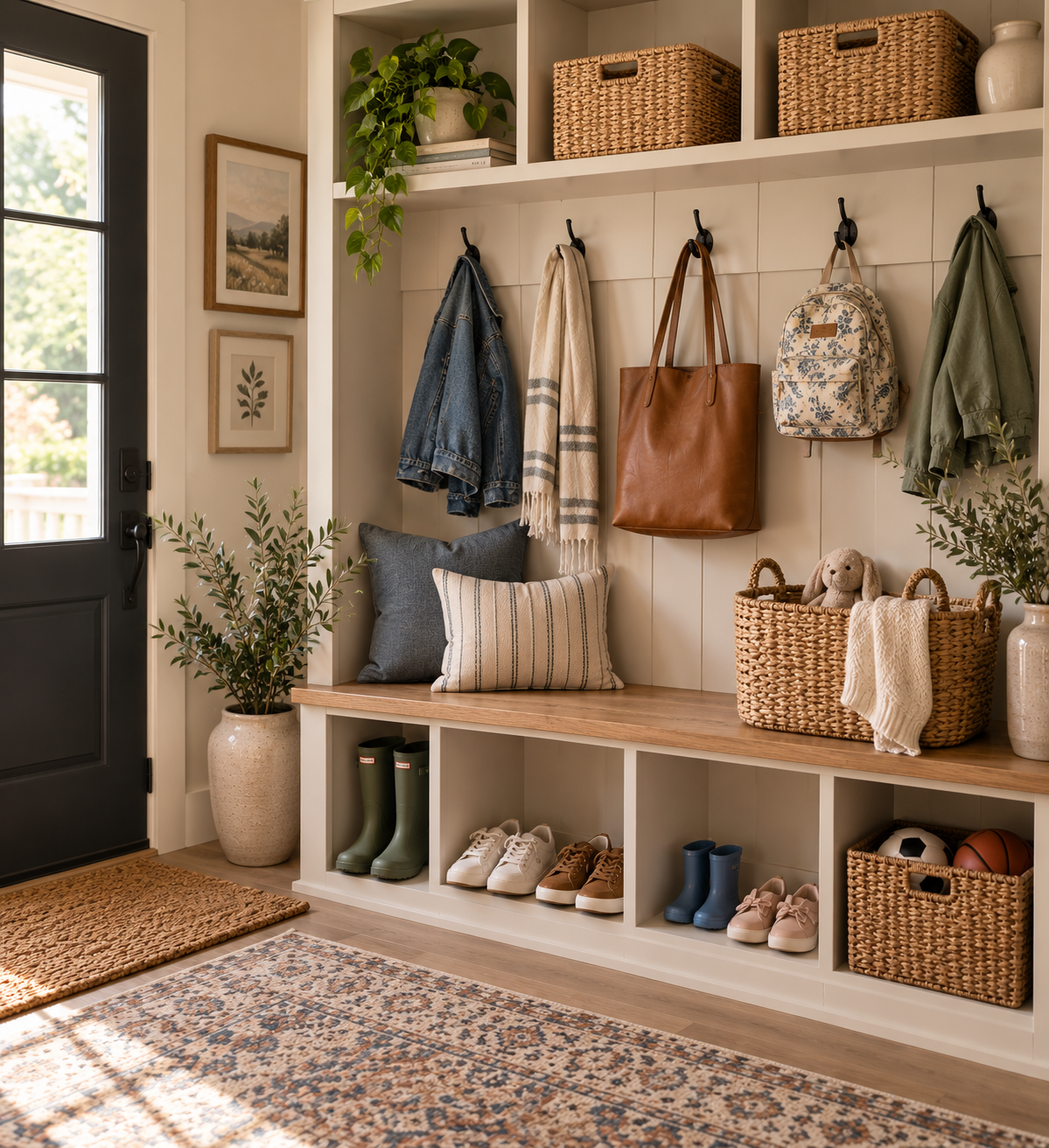
A hamper with a lid might look beautiful, but if clothes consistently land beside it, an open basket may work better. A complicated toy-sorting system may photograph beautifully, but a few broad categories can be much easier for children—and adults—to maintain. And if you use something every morning, storing it behind three other things probably isn’t doing you any favors.
Look for places where you can remove a step: open the basket instead of the cabinet, use a tray instead of several containers, or keep frequently used items within easy reach.
Good organization should make everyday routines feel easier—not give you another system to maintain.
6. Give Categories Room to Breathe
Sometimes clutter isn't caused by a lack of organization—it happens because we've simply tried to fit too much into the space we've given something.
A drawer packed completely full is difficult to use. A basket overflowing with toys stops being useful. And a pantry shelf where everything has to be moved to reach what you need creates more work every time you use it.
When possible, leave a little breathing room. You don't need to fill every container, shelf, or drawer just because there's space available.
The goal isn't to fit the most things into your home. It's to make the things you choose to keep easier to live with.
That might mean using a slightly larger basket, dividing one crowded category into two, or letting go of things you no longer use.
A little empty space can be surprisingly functional—and it often makes a room feel calmer, too.
7. Choose Systems That Make Your Home Easier to Live In
It can be tempting to judge organization by how a space looks when everything is perfectly put away. But the better question is: Does this make everyday life easier?
A good system might save you a few minutes in the morning. It might make cleanup easier at the end of the day. It might help your child put away their own toys, keep the kitchen counter from becoming a catchall, or simply make it easier to find what you need when you're rushing out the door.
Those small improvements add up.
Your home doesn't need to function like a showroom. It needs to support the people living there.
Choose organization that serves your life—not the other way around.
Because ultimately, a well-organized home isn't about having less mess. It's about spending a little less time managing your home and a little more time living in it.
Start Small
You don't have to organize your entire home to make it feel easier to live in.
Choose one place that frustrates you regularly—a cluttered counter, an overflowing drawer, the pile of shoes by the door—and start there. Pay attention to what naturally happens in that space, then create the simplest system you can to make it work a little better.
Once that system becomes part of everyday life, move on to the next one.
A home becomes easier to manage through dozens of small decisions made over time—not one perfect organizing weekend.
Pretty things. Practical solutions. And a home that works for real life.
