
How to Choose Things for Your Home That Are Both Beautiful and Useful
It's easy to bring something home because it's beautiful.
It's also easy to buy something purely because it solves a problem.
But the things I tend to love longest are usually somewhere in between—the pieces that make everyday life easier while also making my home feel more like me.
A basket that hides the things I don't want scattered across the living room. A lamp that makes a dark corner useful and cozy. A kitchen tool that earns its drawer space because I actually reach for it. A piece of furniture that looks beautiful but can also handle real family life.
That's the sweet spot behind so much of Mama Dove Living: pretty things and practical solutions don't have to be two different categories.
And as I've become more intentional about what comes into my home, I've found that asking a few simple questions before buying something can make the difference between another thing to manage and something that genuinely earns its place.
Here's what I consider when deciding whether something is worth bringing home.
1. Start With the Problem It Needs to Solve
Before deciding whether something is beautiful enough for your home, ask what you actually need it to do.
Maybe blankets keep piling up beside the sofa. The entryway needs somewhere for keys. A dark corner needs better lighting. Toys need a place to land at the end of the day.
Starting with the problem helps you shop with purpose instead of bringing something home simply because it caught your eye.
Once you know what you need, then you can look for the version that also fits beautifully into your space.
Why it matters: When something solves a real problem, it has a reason to be in your home beyond simply taking up space.
2. Ask Whether You’ll Actually Use It
Something can be incredibly useful in theory and still be completely wrong for the way you live.
Before buying it, picture yourself using it on an ordinary Tuesday—not in the perfectly styled version of your life, but in the one you actually have.
Will you really put the blankets into that basket? Will you use the kitchen gadget often enough to justify storing it? Is that beautiful chair comfortable enough that someone will actually sit in it?
Practical doesn't mean an item can be useful. It means it's useful to you.
Why it matters: The best purchases fit naturally into routines you already have rather than requiring you to create new habits just to justify owning them.
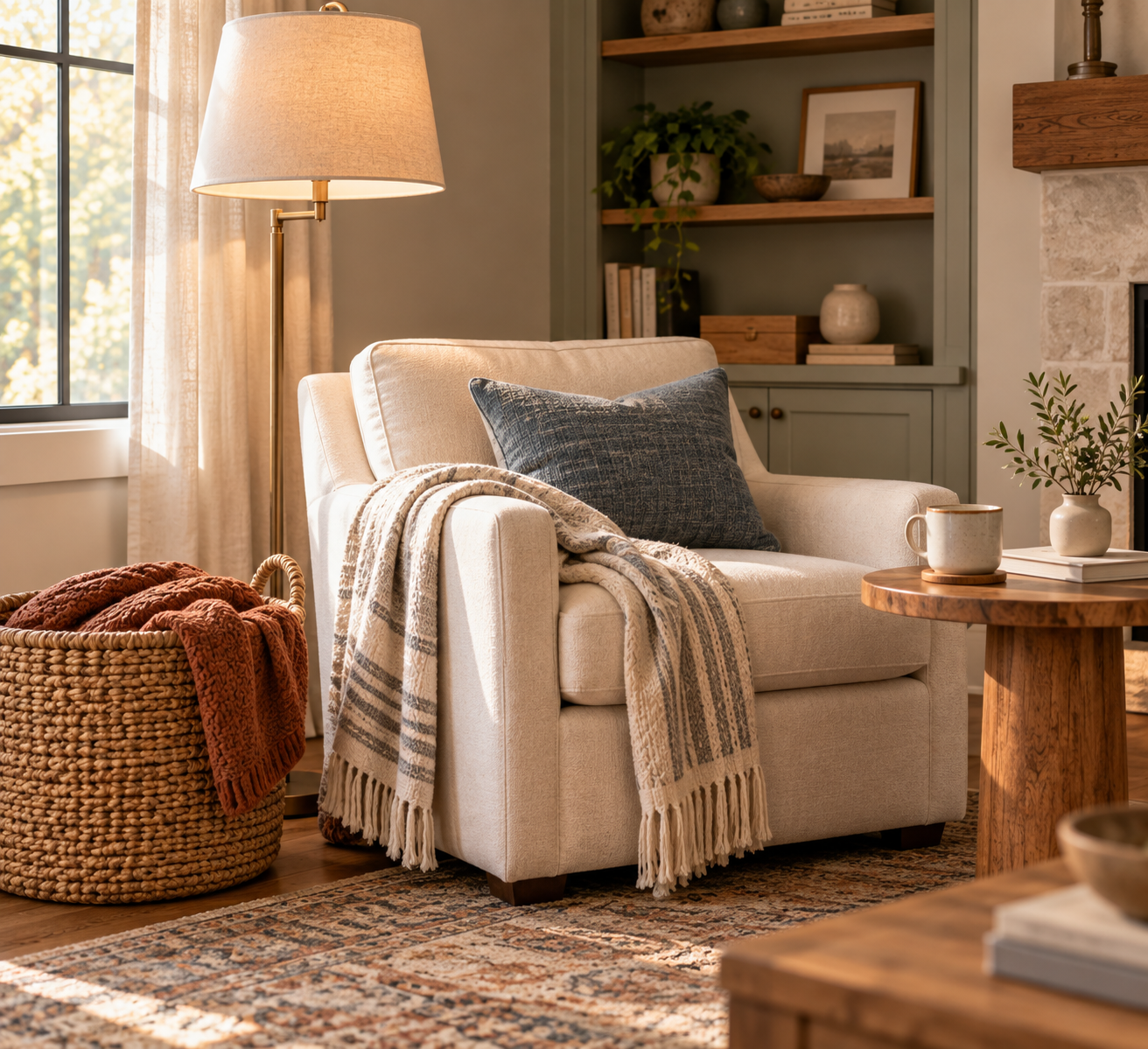
3. Consider Where It Will Live Before You Buy It
One of the easiest ways to accumulate clutter is to bring something home without knowing where it's going to live.
Before buying something, picture the exact place you'll put it. Is there actually room for it? Will it replace something you already own, or will you need to find space for both?
This matters just as much for small purchases as large ones. A beautiful serving bowl still needs cabinet space. A countertop appliance still needs somewhere to live when you're not using it. Even décor needs a place where it adds something rather than simply filling another surface.
If you can't immediately picture where something belongs, that's often a good reason to wait.
Why it matters: Deciding where something will live before bringing it home helps prevent useful purchases from becoming another storage problem.
4. Look for Materials and Colors That Already Belong in Your Home
Practical things don't have to look purely functional.
Once you've found something that solves the problem, look for a version that works with the materials and colors you already love. Warm wood instead of plastic. A woven basket instead of a brightly colored bin. A ceramic soap dispenser instead of packaging you don't want sitting on the counter.
That doesn't mean everything has to match. In fact, a home usually feels more interesting when it doesn't. The goal is simply to choose things that feel connected to the rest of your space.
Pay attention to the colors, finishes, and textures that appear repeatedly throughout your home. Those are often the best clues for what will continue to feel right years from now.
Why it matters: When practical pieces also fit the visual language of your home, you don't feel the same need to hide them away.
5. Think About What It Will Be Like to Live With
Something can look beautiful in a photograph and still be frustrating to own.
Before bringing it home, think beyond the way it looks on the first day. Will it be difficult to clean? Does the fabric make you nervous around kids? Will the finish show every fingerprint? Does it have to be moved every time you need to use the surface underneath it?
None of those things automatically make something a bad choice. They simply matter when you're deciding whether it fits the way your household actually lives.
Sometimes the slightly less delicate option becomes the thing you love more because you're able to relax and actually use it.
Why it matters: A beautiful home should support everyday life, not make you afraid of everyday life happening inside it.
6. Ask Whether It Makes Something Easier
This is one of my favorite questions to ask before bringing something into our home: Does it make something easier?
Maybe a basket gives toys a place to land. A washable rug makes a busy family space less stressful. A lamp makes an overlooked corner more useful. A divided drawer organizer means you stop digging for the same thing every morning.
The improvement doesn't have to be dramatic. Some of the best things in a home solve very small problems—but they solve those problems over and over again.
And when something makes everyday life easier and you're happy seeing it in your home, that's usually where practical and beautiful meet.
Why it matters: The things that earn their place are often the ones quietly making your routines better every day.
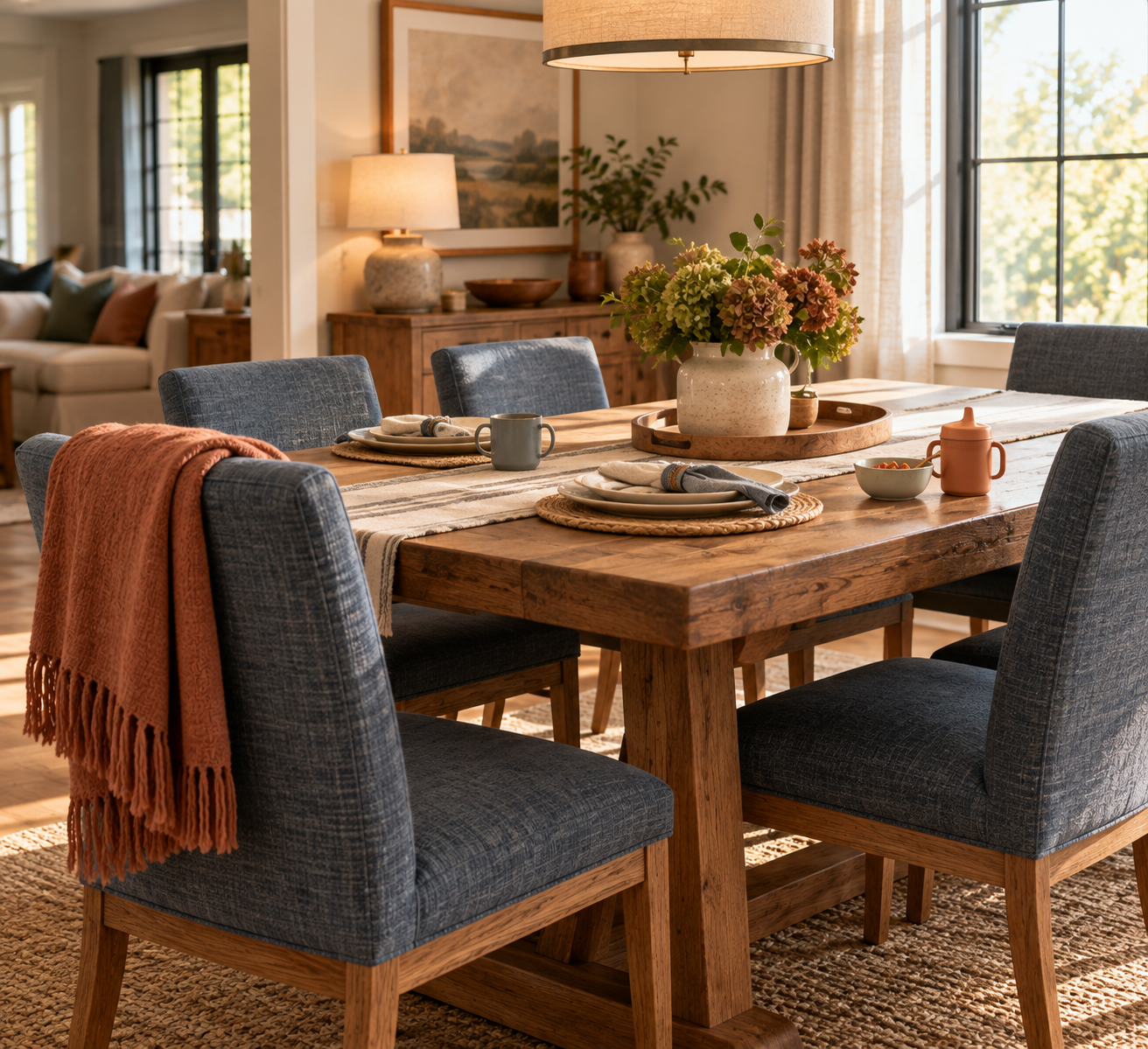
7. Choose Things That Can Do More Than One Job
Some of the hardest-working pieces in a home are the ones that aren't limited to a single purpose.
A beautiful basket can hold blankets today and toys tomorrow. A small stool can become extra seating, a side table, or a place to set something down. A tray can organize a countertop, serve drinks, or gather everyday essentials on a coffee table.
This doesn't mean everything you own needs multiple functions. But when you're choosing between two similar pieces, versatility can be a good reason to choose one over the other.
It's especially helpful in spaces where storage is limited or family needs change over time.
Why it matters: Versatile pieces can adapt as your home and routines change, which often means you can keep and use them longer.
8. Think About What You Already Own
Sometimes the best purchase is the one you realize you don't need to make.
Before buying something new, take a quick look around your home. You may already have a basket that could move to another room, a tray tucked away in a cabinet, or a small table that would solve the problem perfectly somewhere else.
Moving things around can also help a home feel fresh without continually adding more to it.
And if you still need something after you've checked what you own, you'll have a much clearer idea of what you're actually looking for.
Why it matters: Shopping your own home first helps you buy more intentionally and keeps useful things from being forgotten simply because they're in the wrong place.
9. Consider Whether You’ll Still Like It After the Trend Passes
There's nothing wrong with loving something that's having a moment. Trends can introduce us to colors, materials, and ideas we might never have considered otherwise.
But before spending money—especially on something larger or more expensive—ask yourself whether you love the actual piece or simply love seeing it everywhere right now.
For bigger purchases, I tend to favor shapes, materials, and colors that feel connected to the rest of the home, then let smaller and less expensive pieces bring in trends or seasonal personality.
You don't have to build a timeless home where nothing ever changes. You simply want the things that are harder or more expensive to replace to have a little staying power.
Why it matters: Choosing intentionally makes it easier to create a home that evolves over time without feeling as though everything needs to be replaced whenever styles change.
10. Use the Two-Question Test
When I'm unsure whether something belongs in my home, I like to come back to two simple questions:
Does it make something easier?
And would I be happy seeing it in my home?
Not every object has to pass both questions in exactly the same way. Art may be there simply because you love looking at it. A hardworking household tool may spend most of its life tucked away in a cabinet.
But for so many of the everyday things we live with—storage, kitchen essentials, furniture, lighting, cleaning tools, family-friendly pieces—the sweet spot is finding something that does its job well without making you feel like you have to hide it.
Why it matters: Those two questions make it easier to look past impulse, trends, and clever marketing and focus on whether something will genuinely add value to your home.
Let Things Earn Their Place
Creating a beautiful home isn't about filling it with beautiful things.
And creating a practical home isn't about choosing function at the expense of everything you love.
The goal is somewhere in between: a home filled thoughtfully with things that serve the people living there, make everyday routines a little easier, and contribute to the way you want your home to feel.
Sometimes that means buying the beautiful version of something practical. Sometimes it means waiting until you find the right thing. And sometimes it means realizing you don't need anything new at all.
Pretty things. Practical solutions.
It isn't just a tagline. It's a pretty good way to decide what deserves a place in your home.
