
10 Simple Ways to Make Your Kitchen Work Better Every Day
The kitchen is one of the hardest-working rooms in a home.
It's where coffee gets made before everyone is fully awake, lunches are packed, groceries are unloaded, snacks are grabbed, dishes pile up, and dinner somehow needs to happen again every single night.
When a kitchen isn't working well, you feel it in dozens of tiny ways throughout the day. You're searching for the right utensil, moving things out of the way to use the counter, or walking across the kitchen for something you reach for constantly.
The good news is that making a kitchen work better doesn't necessarily require more cabinets, a bigger pantry, or an expensive renovation.
Often, it's about paying attention to how you actually use the space and making a few small changes around those routines.
Here are 10 simple ways to make your kitchen easier to cook in, easier to clean up, and a little more enjoyable to live with every day.
1. Keep the Things You Use Most Where You Use Them
A well-organized kitchen isn't necessarily one where everything is hidden away. It's one where the things you reach for constantly are easy to reach.
Pay attention to your everyday routines for a day or two. If you're walking across the kitchen every morning for coffee supplies, reaching into an inconvenient cabinet for cooking utensils, or constantly moving something to get to what you actually need, that's useful information.
Try moving frequently used items closer to where the task happens. Cooking utensils can live near the stove. Coffee essentials can stay near the coffee maker. Everyday glasses might make more sense near the refrigerator or sink.
Why it works: Organizing according to how you actually move through the kitchen eliminates unnecessary steps and makes everyday routines feel more natural.
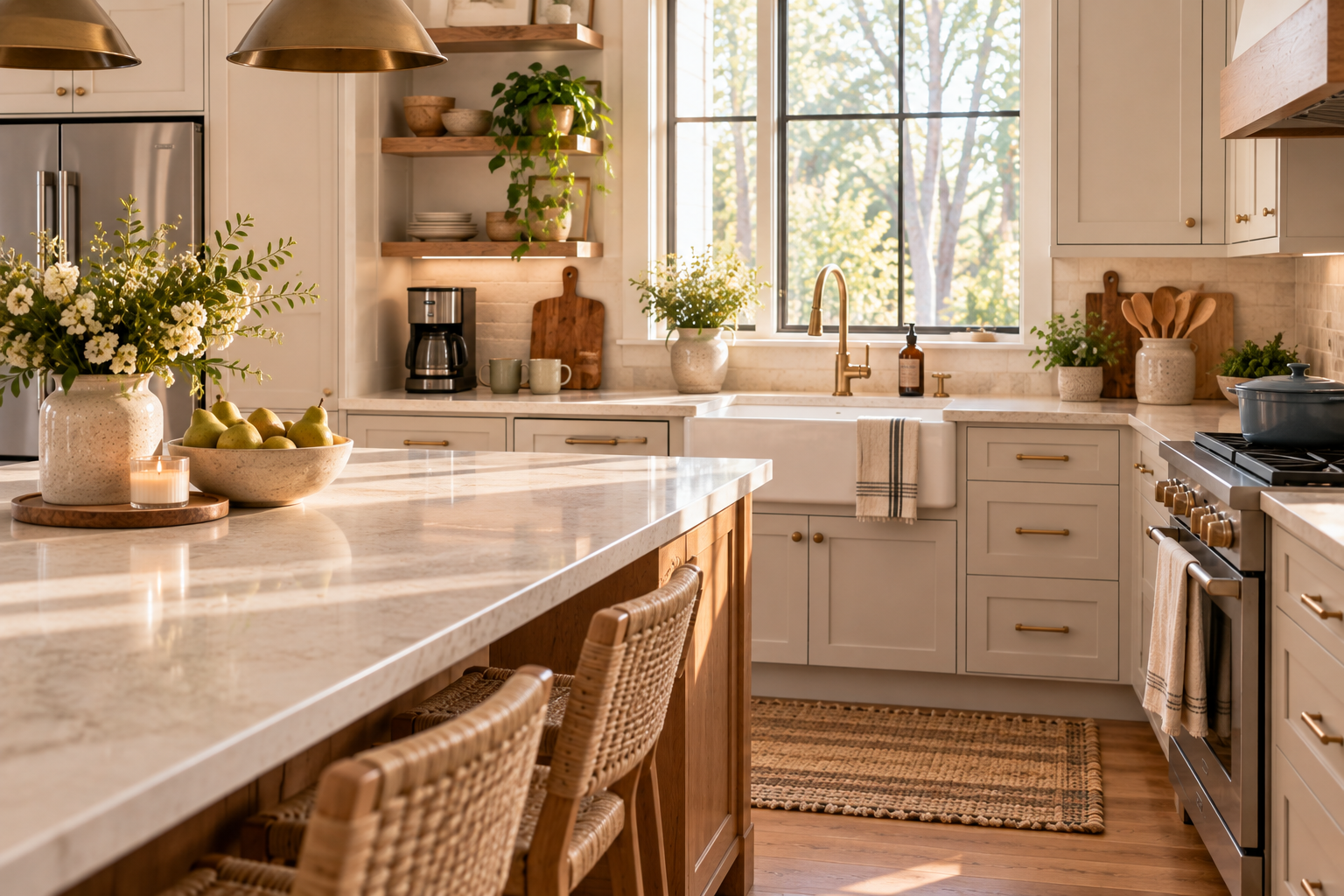
2. Give Your Countertops Some Breathing Room
Kitchen counters have a way of becoming permanent homes for things simply because there was nowhere else convenient to put them.
Take a look at what's currently sitting out and ask yourself what you truly use often enough to deserve countertop space. Appliances used once a week, stacks of mail, extra serving pieces, or things that have simply migrated there may be better somewhere else.
This doesn't mean your counters need to be completely bare. A coffee maker you use every morning, a beautiful bowl of fruit, or a crock of frequently used utensils can absolutely belong there.
Why it works: A little open counter space gives you room to actually use your kitchen and makes the entire room feel calmer at the same time.
3. Organize Drawers Around the Tasks You Do Most
Kitchen drawers work better when they're organized around the way you cook rather than simply by what fits where.
Think about the tasks you repeat constantly. If you prep food in the same area of the counter, keep the knives, measuring tools, peelers, and other frequently used prep items nearby. If you pack lunches in one spot, give those supplies an easy-to-reach home together.
You don't need a separate organizer for every utensil. Sometimes simply removing the things you rarely use and grouping similar tools together creates all the organization you need.
Why it works: When the tools for a task live near one another, you spend less time opening drawers and searching while you're trying to cook.
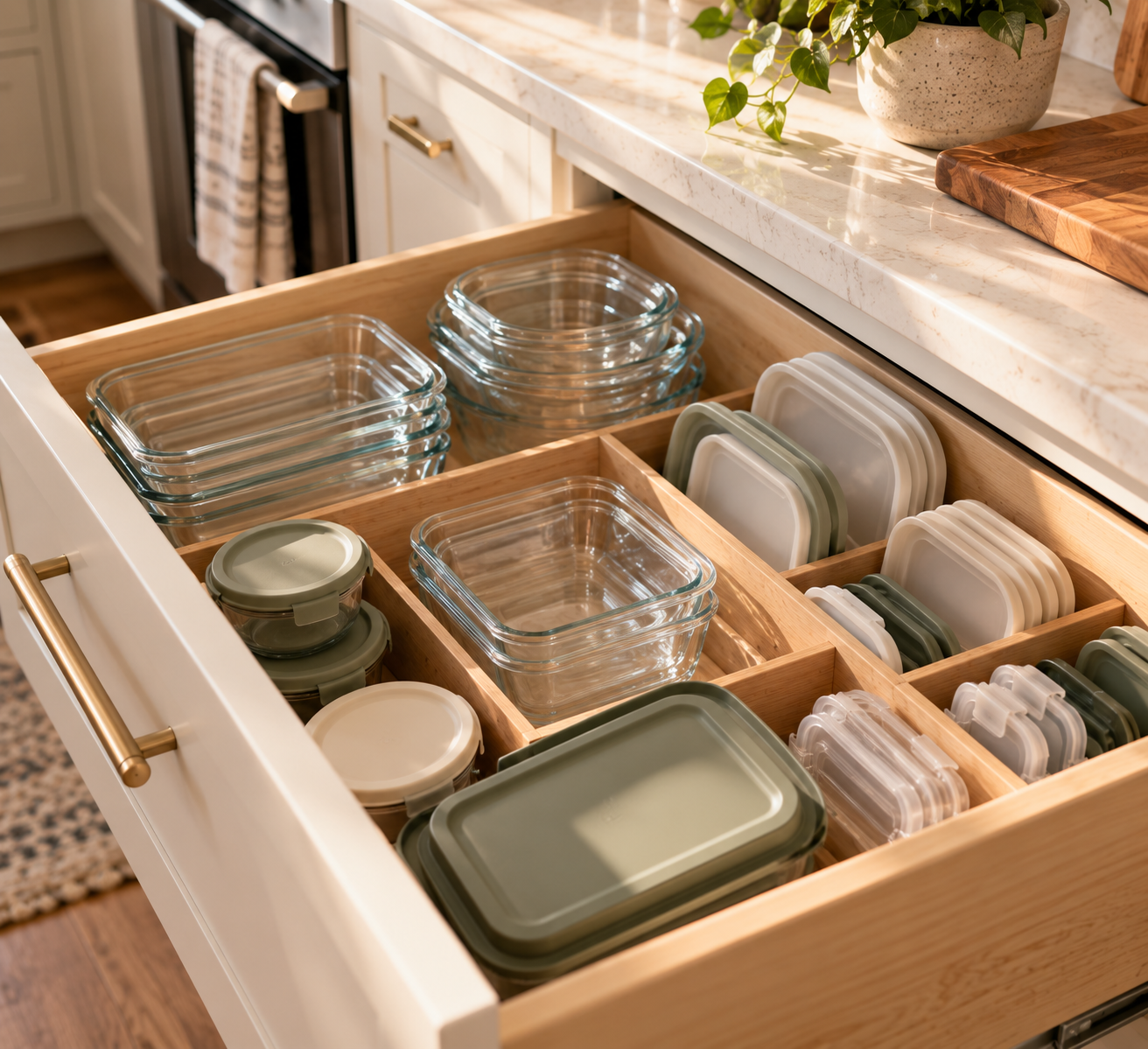
4. Make Food Storage Easy to Put Away
Food-storage containers are useful right up until you're digging through a cabinet trying to find the lid that matches.
Keep the system as simple as possible. Nest containers when it makes sense, store lids together where they're easy to see, and let go of containers that are cracked, warped, missing lids, or rarely used.
If your collection has grown over time, you may also find that having fewer container shapes and sizes makes the entire cabinet easier to manage.
The most important part is that your system should be easy to maintain after the dishwasher is unloaded—not just look organized on the day you set it up.
Why it works: A simple food-storage system makes leftovers, meal prep, and cleanup easier while preventing one cabinet from becoming a daily frustration.
5. Create a Small Everyday Cooking Zone
If you cook regularly, there are probably a handful of things you reach for almost every time—oil, salt, pepper, a favorite utensil, or the cutting board you use constantly.
Rather than storing every cooking essential in a different part of the kitchen, keep your most-used items close to the area where you prep or cook. That might mean a utensil crock beside the stove, oils in a nearby cabinet, or cutting boards stored within easy reach of your main prep space.
Be selective about what earns this prime real estate. The goal isn't to move your entire pantry onto the counter. It's to keep the small group of things you genuinely use every day convenient.
Why it works: Fewer trips around the kitchen make cooking feel more efficient while keeping the workspace functional rather than cluttered.
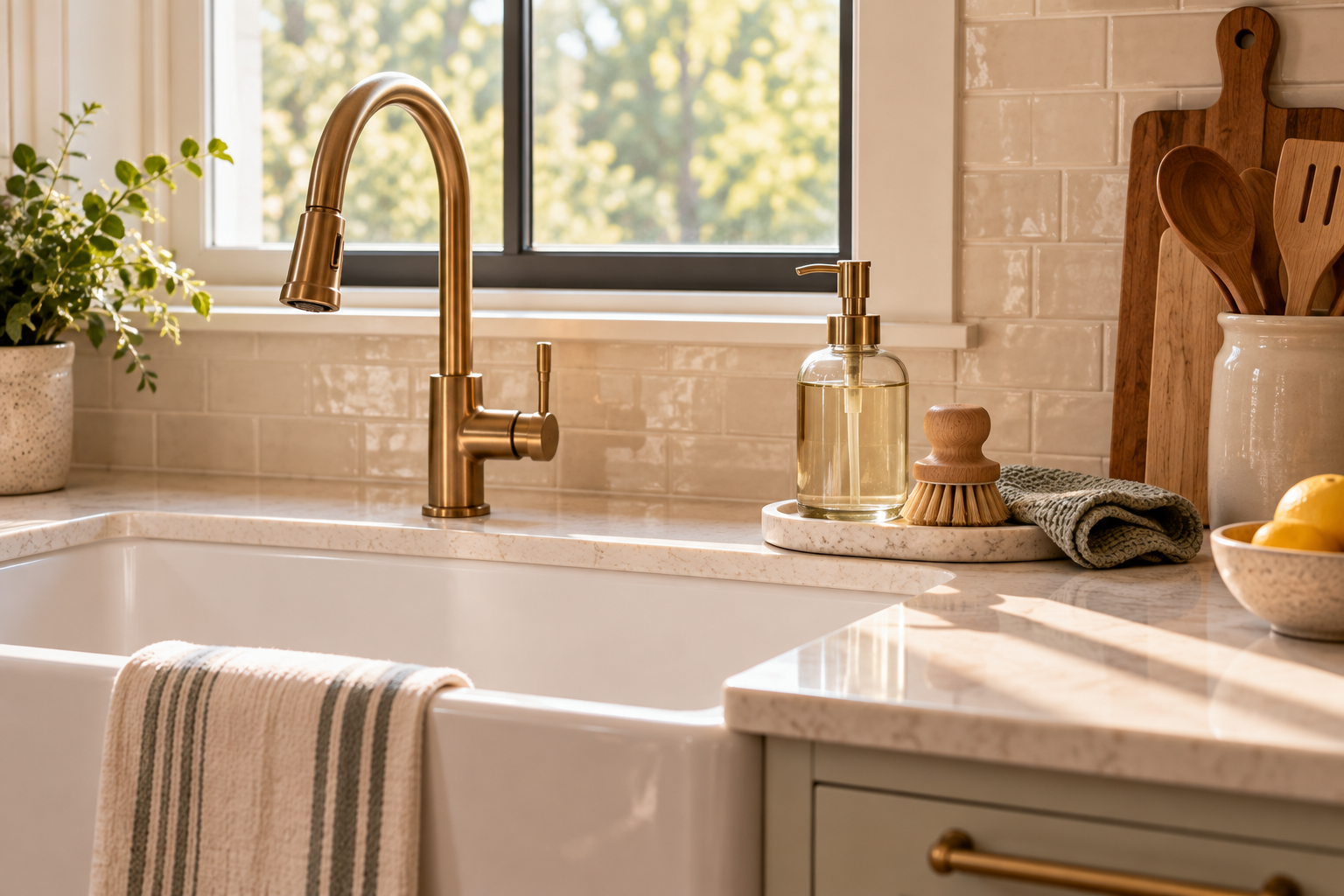
6. Give Cleaning Essentials a Simple Home Near the Sink
The things you use to clean the kitchen shouldn't be harder to find than the mess itself.
Keep your everyday dish and cleanup essentials together near the sink—whether that's in the cabinet below, a nearby drawer, or a small container that keeps the basics from spreading across the counter.
You probably don't need every cleaning product you own stored here. A few frequently used essentials, extra cloths or sponges, and dishwasher supplies may be enough. Less-used products can live somewhere else.
Why it works: When cleanup supplies are easy to reach and easy to put away, resetting the kitchen after meals becomes a little less cumbersome.
7. Keep Everyday Dishes in the Easiest Spot
Not every cabinet in a kitchen is equally convenient, so save the best locations for the things your household uses constantly.
Everyday plates, bowls, glasses, and mugs should be somewhere they're easy to reach and easy to put away. If you're repeatedly stretching for them, walking across the kitchen after unloading the dishwasher, or moving less-used dishes out of the way, consider rearranging the cabinet.
Special serving pieces, seasonal dishes, and things you only use occasionally can take the higher shelves or less convenient spaces.
Why it works: Giving everyday dishes priority makes setting the table, grabbing a glass, and unloading the dishwasher easier every single day.
8. Create a Place for the Things That Enter the Kitchen but Aren’t Kitchen Things
Kitchens tend to collect much more than food and dishes.
Mail gets dropped on the counter. Chargers appear beside the toaster. Pens, school papers, receipts, sunglasses, and all sorts of little household things somehow find their way into the room.
Rather than pretending these things won't end up in the kitchen, give the ones that legitimately need to be there a small designated home. A single drawer, shallow basket, or section of a nearby cabinet may be enough.
For everything else, make a habit of returning it to the room where it actually belongs instead of allowing the kitchen counter to become permanent storage.
Why it works: Giving miscellaneous items a boundary keeps everyday life from slowly taking over the surfaces you need for cooking and eating.
9. Make the Refrigerator Easier to See Into
A refrigerator doesn't need matching containers and perfectly arranged shelves to work well. What matters most is being able to see what you have before it gets forgotten.
Try grouping similar foods loosely together and giving frequently used items predictable places. Keep leftovers where they'll actually be noticed, and avoid packing shelves so tightly that food disappears behind other food.
Before grocery shopping, take a quick look through what you already have. Moving anything that needs to be used soon toward the front can help prevent perfectly good food from being forgotten.
Why it works: When you can easily see what you have, you're more likely to use it, less likely to buy duplicates, and less likely to discover something weeks after it should have been eaten.
10. End the Day With a Quick Kitchen Reset
The kitchen doesn't need to be spotless every night to make tomorrow morning easier.
Clear the main countertop, put away the things that wandered into the room, load or start the dishwasher if needed, wipe the table or island, and return a few everyday items to their usual places.
Keep the reset short. This isn't the time to deep-clean the refrigerator or reorganize a cabinet. You're simply giving tomorrow a better starting point.
Some nights you'll do more, and some nights you'll do less. That's okay.
Why it works: Walking into a reasonably reset kitchen in the morning removes one layer of work from a day that hasn't even started yet.
A Kitchen That Works for the Way You Live
A better-functioning kitchen isn't necessarily the one with the most storage, the biggest island, or the prettiest pantry.
It's the one where the things you use are where you need them, the counters have enough room to work, and everyday routines don't require unnecessary searching, moving, or rearranging.
Start by noticing the little frustrations you experience repeatedly. The utensil that's always too far away. The cabinet that makes you sigh every time you open it. The pile that keeps appearing on the counter.
Those small frustrations are often telling you exactly where to begin.
You don't need a perfect kitchen. You need a kitchen that makes everyday life a little easier.
