
How to Make Your Home Feel More Put Together Without Buying More Stuff
Sometimes a home doesn't need anything new. It just needs a little attention.
When a room starts to feel cluttered, unfinished, or somehow “off,” it's tempting to assume the answer is another basket, another piece of décor, or something new to fill the space. But often, the biggest changes come from working with what you already have.
Moving something to a better spot. Clearing one surface. Bringing pieces together instead of scattering them around the room. Letting a little more light in.
These small changes don't cost anything, but they can completely change how a home feels.
Here are a few simple ways to make your home feel calmer, warmer, and more pulled together—without buying a thing.
1. Clear One Surface Completely
When a room feels visually busy, you don't have to tackle the whole space at once. Start with one surface—a kitchen counter, coffee table, dresser, bathroom vanity, or entry console.
Take everything off, wipe it down, and then add back only what actually needs to live there or genuinely adds something to the room. You may be surprised by how few things you want to return once you see the surface completely clear.
Why it works: One calm surface gives your eye somewhere to rest and can make the entire room feel more organized, even if nothing else has changed yet.
2. Group Small Things Instead of Spreading Them Out
Several small objects scattered around a room can quickly make it feel cluttered—even when each item is beautiful on its own.
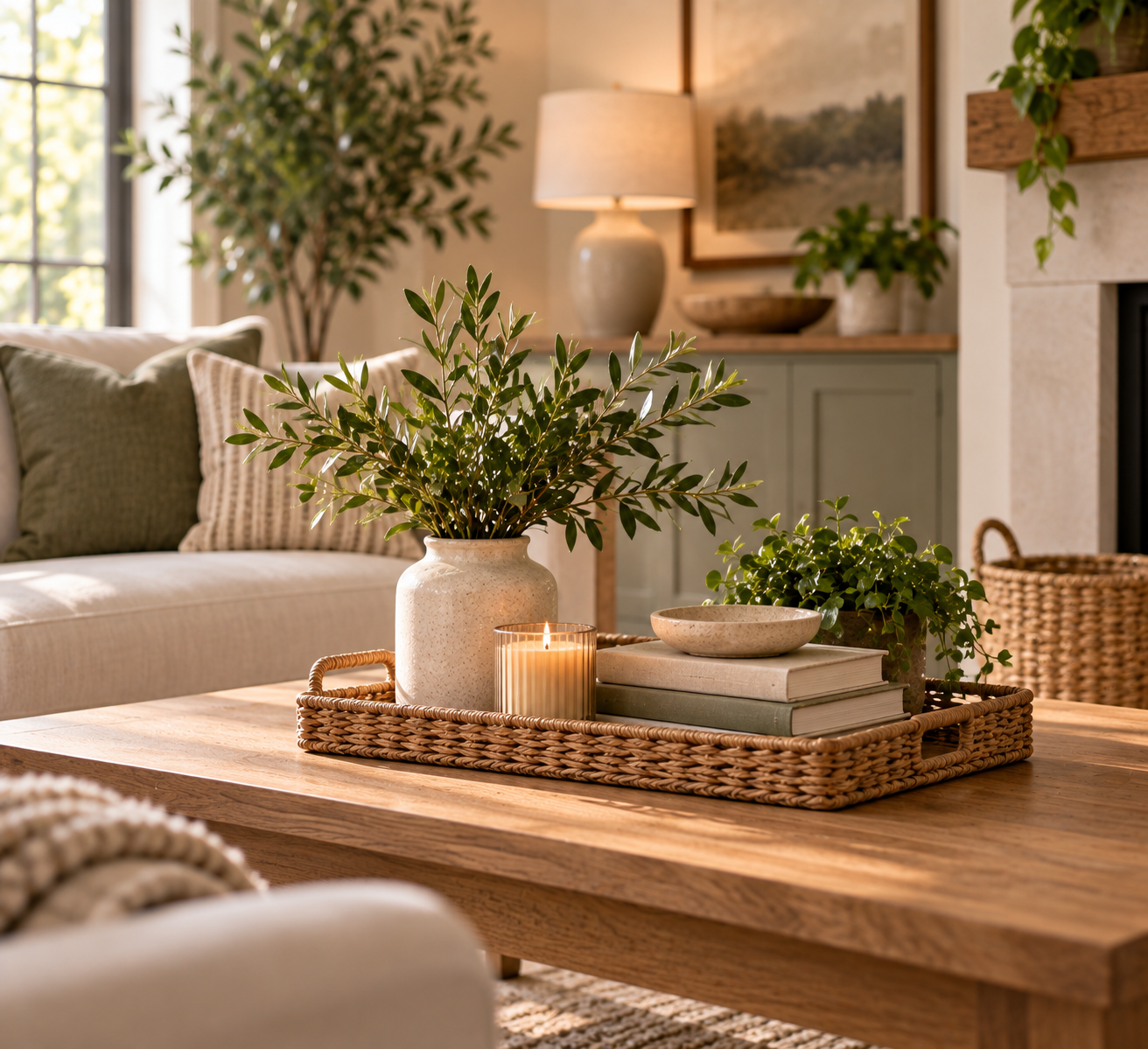
Try gathering a few related pieces together instead. Place a candle beside a small vase. Stack two or three books rather than displaying them separately. Bring everyday countertop items into one intentional little grouping using something you already own.
Why it works: Grouping turns several individual objects into one visual moment, making the room feel calmer and more intentional.
3. Remove Something Before You Add Something
When a room feels unfinished, our first instinct is often to add another pillow, another piece of décor, or something else to fill an empty spot. But sometimes the room doesn't need more—it needs less.
Try removing one or two things that feel unnecessary, out of place, or simply no longer meaningful to you. Then step back and look at the room again before deciding whether anything needs to take their place.
Why it works: A little negative space allows the pieces you truly love to stand out and can make a room feel more settled rather than more decorated.
4. Borrow From Another Room
Before buying something new for a space, take a little walk through your own home.
That vase sitting unnoticed in the bedroom might be perfect on the kitchen counter. A small lamp from the guest room could warm up an entryway. A basket, bowl, piece of art, or stack of books may feel completely different simply because you moved it somewhere new.
You don't have to keep things in the rooms where you originally intended to use them.
Why it works: Moving familiar pieces around gives your home a fresh look without adding anything new—and can help you rediscover things you already love.
5. Let in as Much Natural Light as You Can
Light has an enormous effect on how a home feels, and sometimes the simplest improvement is already sitting right outside the window.
Open the curtains or blinds during the day, move anything unnecessarily blocking a window, and pay attention to whether heavy window treatments are making a room feel darker than it needs to. Even cleaning the glass can make a surprising difference.
You don't need every room flooded with sunshine—the goal is simply to make the most of the natural light you already have.
Why it works: Natural light makes colors feel fresher, rooms feel more open, and the things you already own look better.
6. Use Lamps Instead of Relying Only on Overhead Lighting
Once the sun goes down, lighting becomes one of the easiest ways to make a home feel warmer and more inviting.
Before buying another lamp, look at the ones you already own. Try moving one from a room where it's rarely used to a console, kitchen counter, bookshelf, or dark corner that could use a softer glow.
Turning on several smaller sources of light instead of one bright overhead fixture can completely change the mood of a room.
Why it works: Layered lighting creates warmth and dimension and helps a room feel cozy rather than simply illuminated.
7. Straighten the Things You Already Have
Sometimes a room doesn't need organizing or decorating—it simply needs resetting.
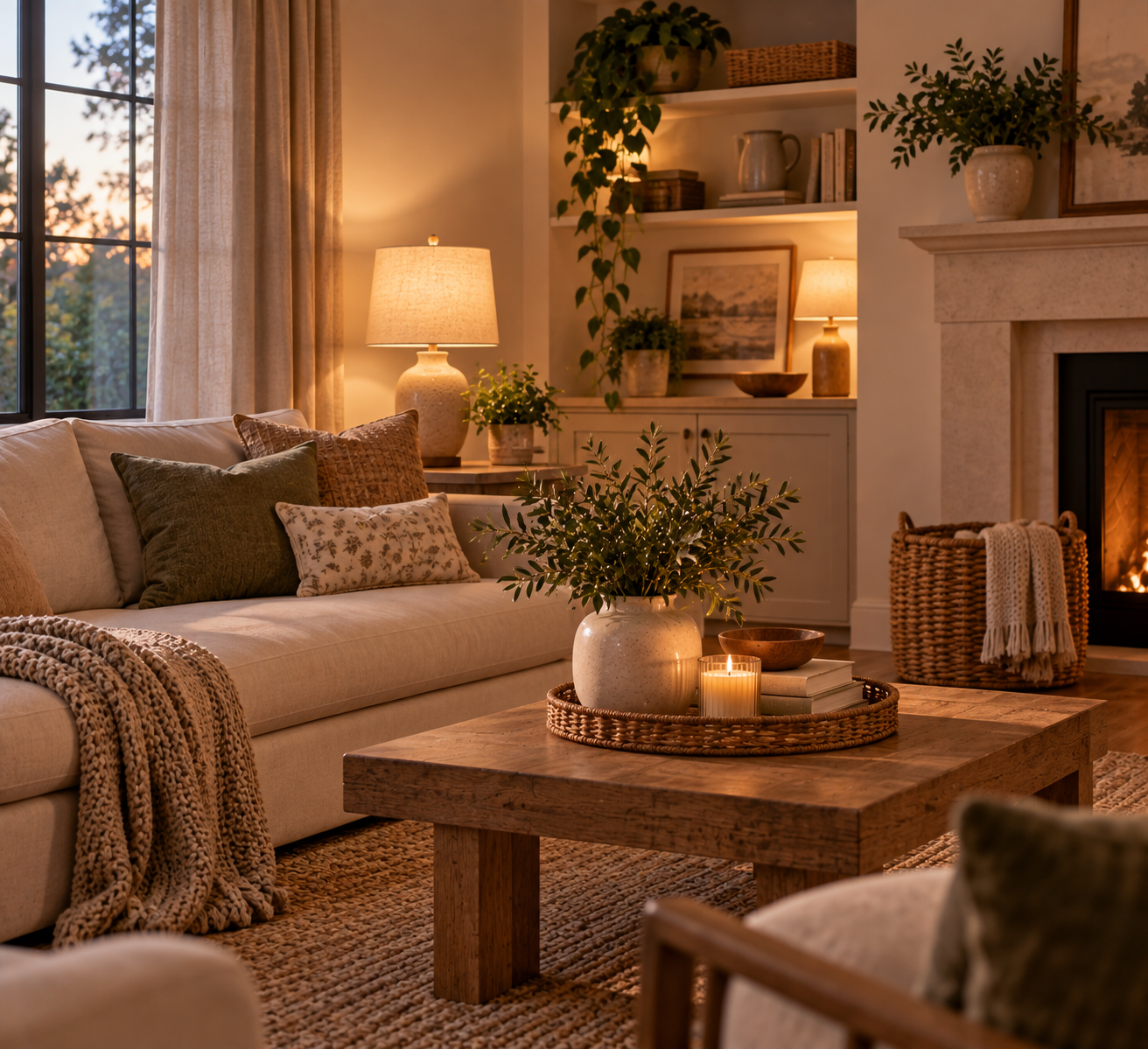
Fluff the sofa cushions. Fold the throw instead of leaving it bunched up. Straighten the rug, stack the books, push in the dining chairs, and return the few things that have wandered away from where they belong.
None of these changes are dramatic, but together they can make a room feel noticeably calmer.
Why it works: Small visual inconsistencies add up. Straightening them restores a sense of order without removing or adding a single thing.
8. Bring Something Natural Indoors
You don't need to buy a bouquet every week to bring a little life into your home.
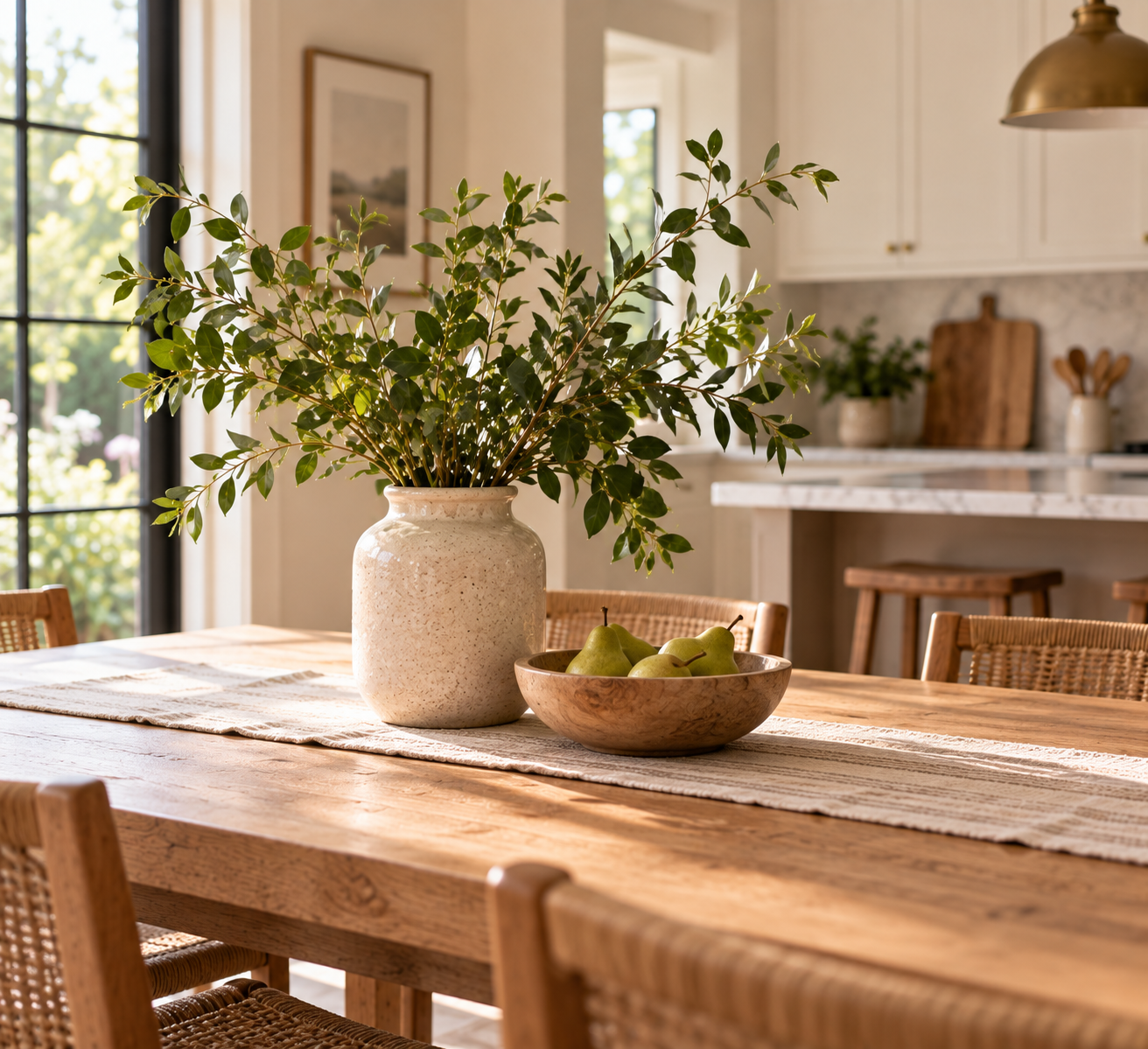
A few branches clipped from the yard, greenery gathered from outside, or flowers already growing around your home can completely change a tabletop or kitchen counter. Even a single leafy branch in a simple vase can make a room feel fresher and more intentional.
Use only plants that are safe and appropriate to bring indoors, especially in homes with children or pets.
Why it works: Natural elements add color, movement, and texture in a way that makes a room feel lived-in rather than overly styled.
9. Create a Little Breathing Room
Furniture and décor don't need to fill every available inch of a room.
Try pulling a chair slightly away from a wall, leaving part of a tabletop intentionally empty, or removing something from a crowded corner. Even a few inches of open space can change the way a room feels.
Empty space isn't wasted space. It gives the things around it room to be noticed.
Why it works: A little breathing room helps a home feel calmer, more considered, and less visually crowded.
10. Reset the Room at the End of the Day
One of the simplest ways to wake up to a home that feels put together is to give your busiest spaces a quick reset before the day ends.
Put the sofa cushions back in place, return stray items to their rooms, clear the kitchen counter, fold the throw, and straighten whatever has shifted throughout the day. It doesn't need to become a cleaning session—even five minutes can make a difference.
Why it works: Instead of yesterday's clutter becoming tomorrow's starting point, you begin the next day with a home that already feels a little calmer.
Your Home Probably Needs Less Than You Think
Creating a beautiful home doesn't always mean bringing something new into it.
Sometimes the biggest difference comes from noticing what you already have—moving it, editing it, caring for it, or simply giving it a little more room to breathe.
A home can feel warm without being full. It can feel collected without being crowded. And it can feel beautifully put together without being perfect.
Before buying something new for a room, try asking yourself: Is there something I can move, remove, rearrange, or appreciate differently first?
You may discover that what your home needed was already there.
