
8 Things to Organize That Make Everyday Life Easier
The best organization projects aren't always the biggest ones.
Sometimes organizing one small part of your home can remove a frustration you deal with every single day. The drawer you dig through every morning. The cabinet where containers tumble out. The pile of shoes everyone steps over by the door.
These aren't dramatic before-and-after projects. They're the little systems that quietly make routines easier because the things you use have a logical place to live.
And that's the kind of organization I love most: not organization for the sake of having a perfectly arranged home, but organization that helps your home work better for the people living in it.
Here are eight places worth organizing because you'll actually feel the difference in everyday life.
1. The Drawer You Reach Into Every Morning
Most homes have at least one drawer that gets used constantly—and somehow becomes the place where everything ends up.
Think about the drawer you open during your morning routine. It might hold kitchen utensils, coffee supplies, hair accessories, makeup, medications, or all the little things you grab while getting everyone out the door.
Empty it completely and pay attention to what you actually reach for every day. Give those items the easiest spots to access, group similar things together, and move anything that doesn't belong somewhere else.
Why it works: When the things you use every morning are easy to see and grab, you eliminate one small frustration before the day has really even started.
2. The Drop Zone by the Door
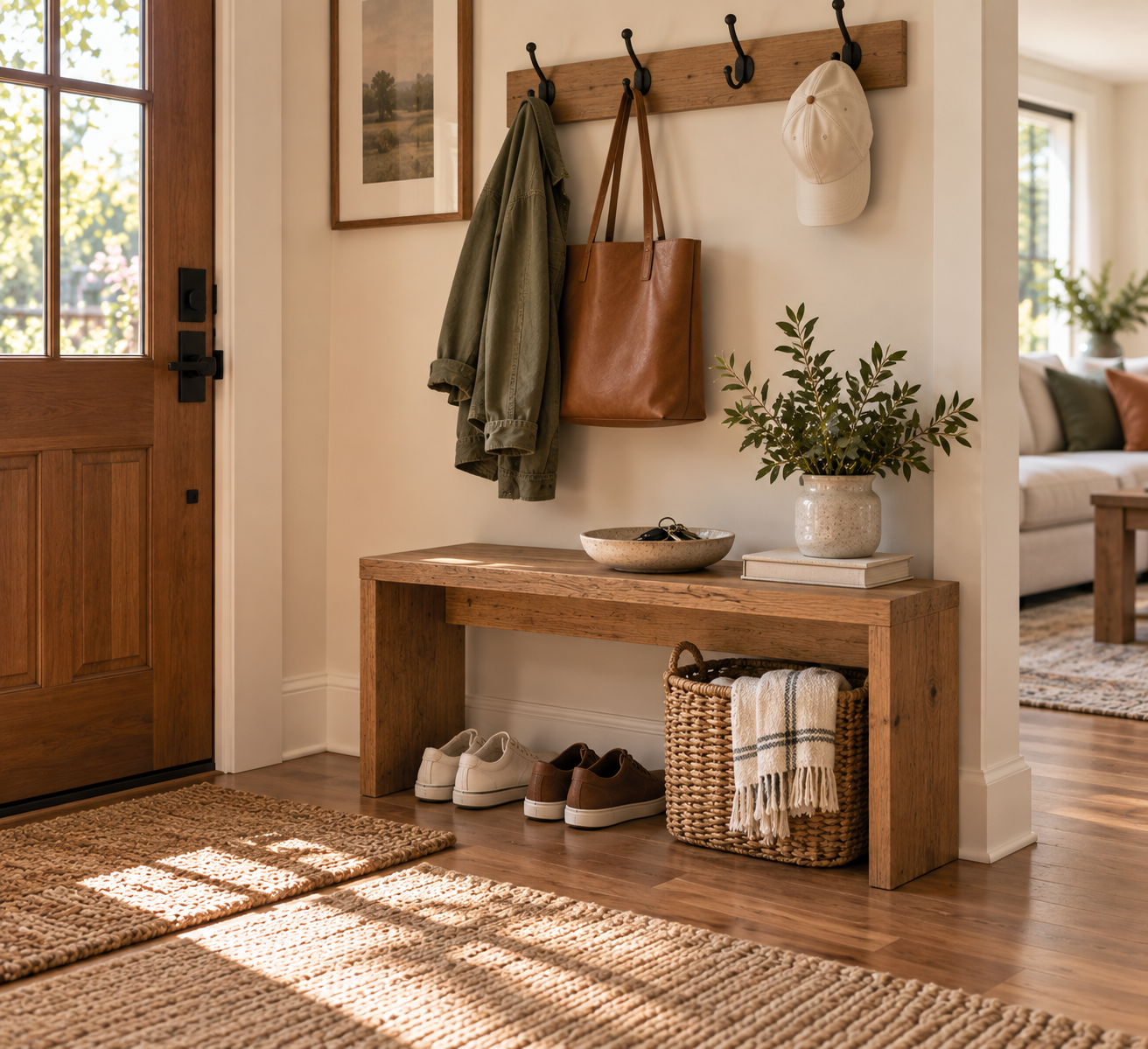
Keys, sunglasses, bags, shoes, mail, and all the little things that travel in and out of the house need somewhere to land.
Instead of fighting that natural habit, create a simple drop zone where your family already tends to put things. Use what you have—a bowl for keys, a drawer for sunglasses, hooks for bags, or a basket for shoes.
The goal isn't to create a picture-perfect entryway. It's to make leaving the house—and coming home—a little easier.
Why it works: When everyday essentials have a predictable landing place, you spend less time searching for them and clutter is less likely to spread into the rest of the house.
3. The Food-Storage Container Cabinet
Few kitchen spaces become frustrating faster than the cabinet or drawer filled with food-storage containers and their lids.
Start by matching every container with its lid and letting go of pieces that are cracked, warped, missing their partner, or simply never used. Then group similar shapes together and keep lids contained in one easy-to-reach spot rather than scattered throughout the cabinet.
You don't need perfectly matching containers for this to work. You just need to be able to reach in and find what you need without starting a small avalanche.
Why it works: Putting away leftovers becomes faster, unloading the dishwasher is easier, and you stop wasting time searching for the one lid that fits.
4. The Everyday Snack Zone
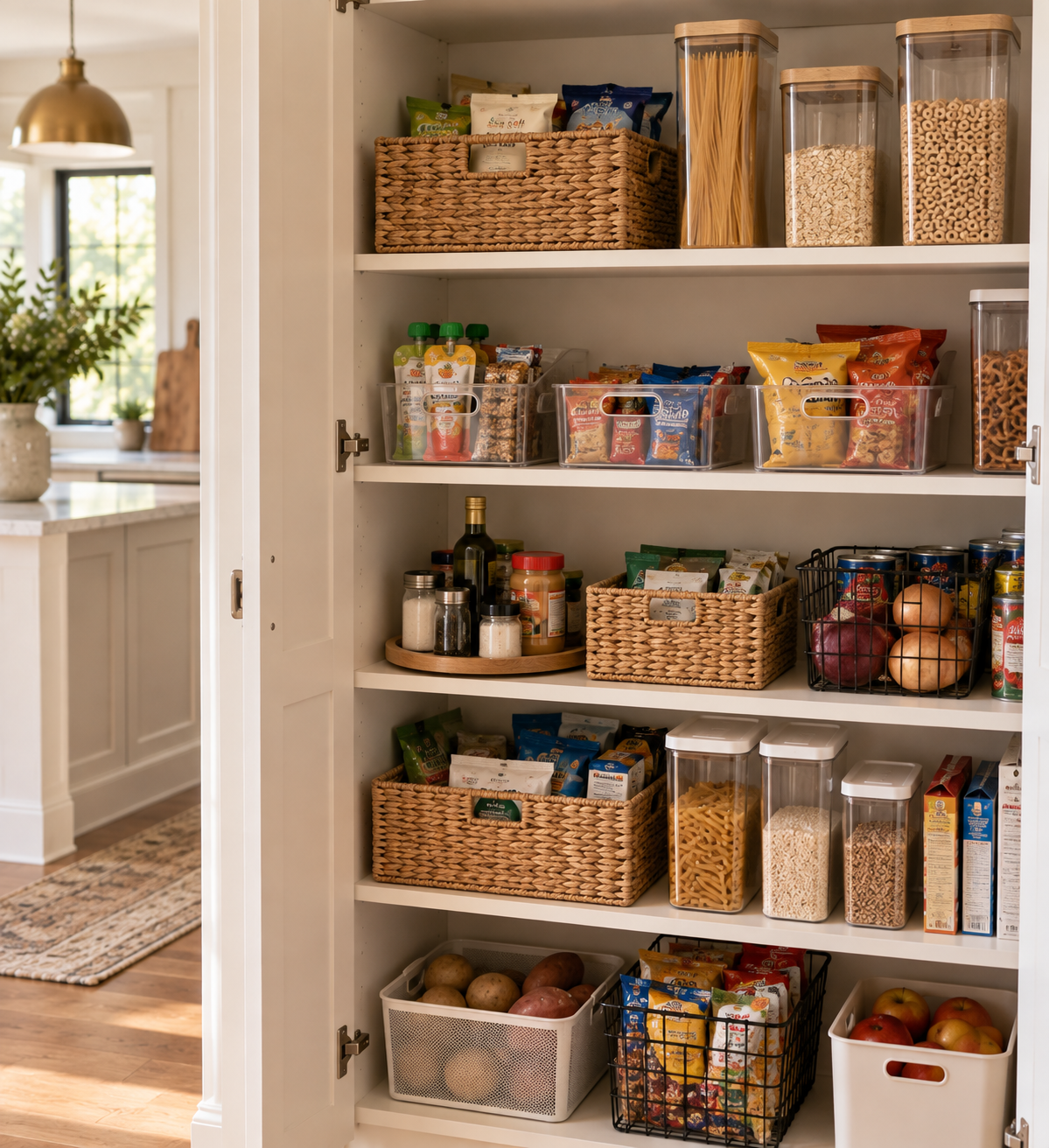
Snacks have a way of spreading across pantry shelves, kitchen cabinets, and countertops—especially when several people are reaching for them throughout the day.
Choose one easy-to-access area for the snacks your household reaches for most. Group similar items together, keep frequently used options toward the front, and use containers you already own if they genuinely make the space easier to use.
For families with little ones, you can also create a small section for age-appropriate snacks they regularly eat, keeping anything that requires adult supervision safely out of reach.
Why it works: Everyone knows where everyday snacks belong, which makes grabbing one—and putting groceries away—much simpler.
5. The Under-the-Sink Cabinet
The cabinet beneath the kitchen or bathroom sink can become a collection point for cleaning products, extra supplies, and half-used bottles surprisingly quickly.
Pull everything out and get rid of anything empty, expired, damaged, or no longer used. Then group what remains by purpose—everyday cleaning supplies together, dishwasher essentials together, extra sponges and cloths together.
Keep the things you reach for most toward the front, and don't feel obligated to fill every inch of available space. A little empty room makes everything easier to reach.
Why it works: You can grab what you need without digging through bottles and supplies every time there's a spill or something needs cleaning.
6. The Bathroom Products You Use Every Day
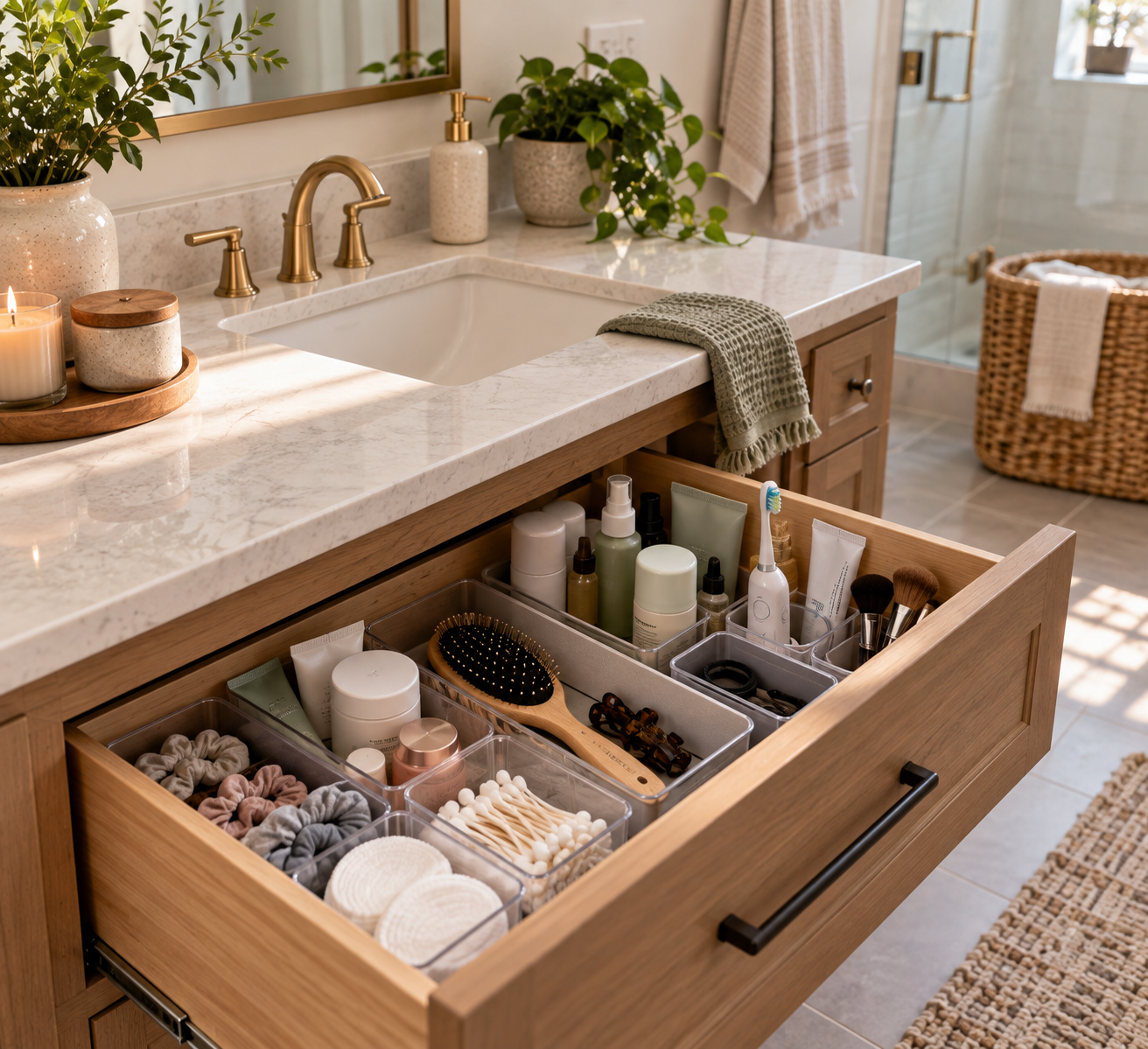
Bathroom organization becomes much easier when you separate the things you actually use every day from everything else.
Think about your morning and evening routines and keep those everyday essentials in the easiest-to-reach drawer, cabinet, or section of the vanity. Backup products, occasional treatments, travel items, and extras can live somewhere less convenient.
The goal isn't to display everything beautifully. It's to make your routine flow without searching through products you rarely use.
Why it works: Organizing around your actual routine means the things you need are exactly where you expect them to be.
7. The Laundry Supplies You Reach for Every Load
Laundry rooms can collect far more than laundry supplies. Empty bottles, stray socks, stain treatments, cleaning products, and miscellaneous household items have a way of settling there over time.
Start with the products you actually use for a normal load of laundry and give those the easiest spots to reach. Keep occasional treatments and backup supplies together somewhere nearby, and move anything unrelated to laundry to a more appropriate home.
You don't need to transfer everything into matching containers. The goal is simply to make the routine easier.
Why it works: When your everyday supplies are exactly where you need them, starting a load becomes almost automatic.
8. The Things That Always Seem to Go Missing
Every household has a few things people are constantly searching for—scissors, tape, chargers, batteries, pens, flashlights, or whatever seems to disappear the moment someone needs it.
Instead of organizing these items based on where you think they should live, give them one predictable home that everyone can remember. A single drawer, small cabinet, or designated section may be all you need.
And if something repeatedly ends up in a particular room, pay attention. Sometimes the best storage location is simply the place where your family naturally uses it.
Why it works: A home becomes easier to manage when everyone knows where frequently needed things belong—and where to return them.
Organize for the Life You Actually Live
The most useful organization systems aren't necessarily the prettiest or the most elaborate. They're the ones that quietly remove friction from your day.
When you're deciding what to organize next, don't start by asking which space would make the best before-and-after photo. Ask yourself: What do I waste time looking for? What frustrates me repeatedly? What part of our routine feels harder than it should?
Start there.
One drawer, one cabinet, or one little landing place may not transform your entire house—but if it makes something you do every day easier, it's doing exactly what a good organization system should.
A more organized home isn't the goal. A home that works better for the people living in it is.
