
Simple Ways to Make Your Home Work Better With Little Kids
Living with little kids changes the way a home needs to work.
Suddenly there are tiny shoes by the door, cups in the kitchen, toys traveling from room to room, and everyday routines that involve getting another little person fed, dressed, cleaned up, and out the door.
It's easy to feel like the answer is more storage, more organizing products, or a house designed entirely around children. But I don't think a family home has to choose between being beautiful and being practical.
Often, a few thoughtful changes can make everyday life with little ones easier while still allowing your home to feel warm, collected, and like you.
The goal isn't to eliminate every toy from sight or create perfectly organized kid spaces. It's to make the things your family does every day flow a little more naturally.
Here are some simple ways to make your home work better with little kids—without letting kid stuff take over every room.
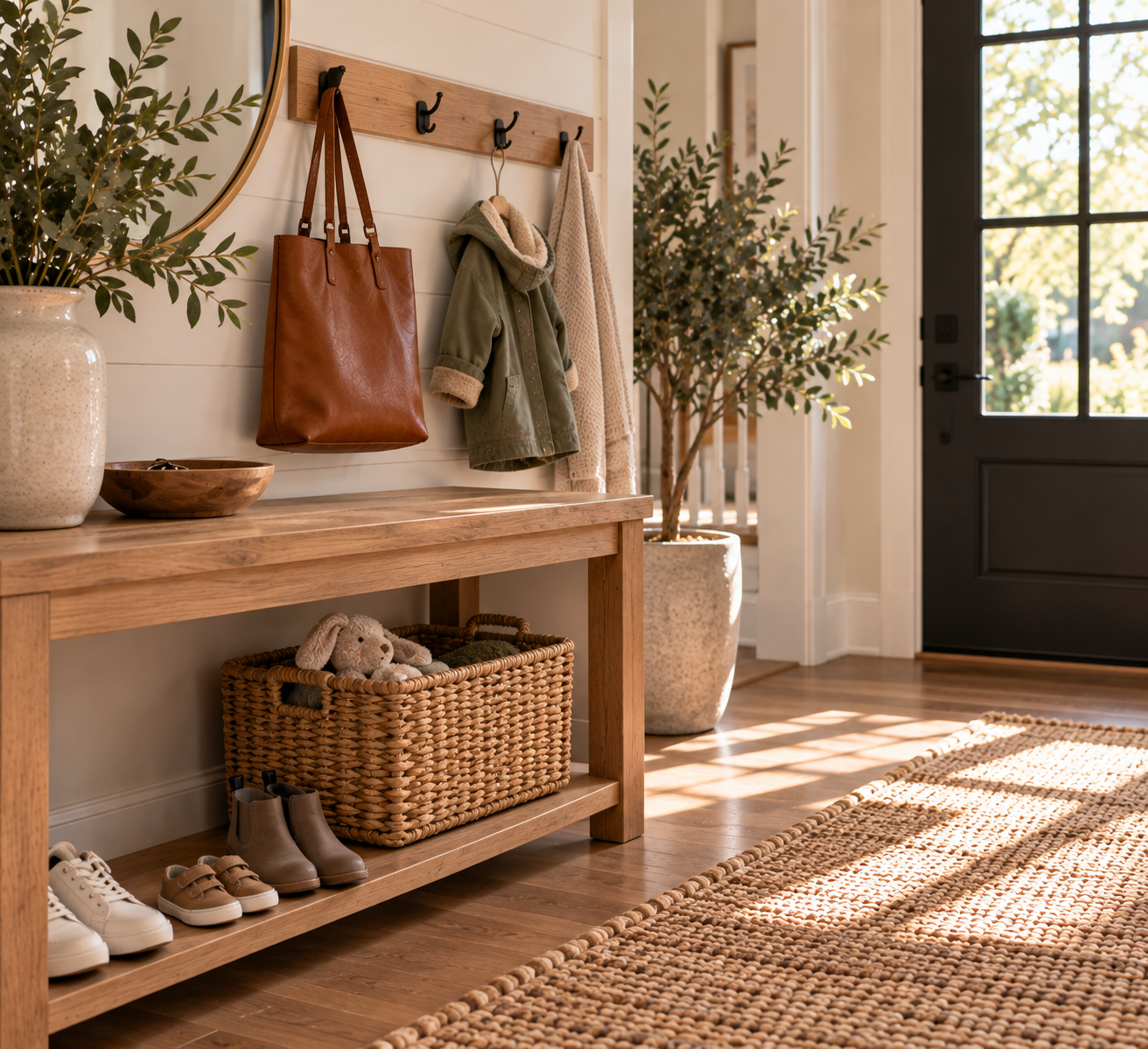
1. Give Shoes a Home Where They Actually Come Off
If little shoes are constantly scattered near the door, the problem may not be that everyone needs to get better about putting them away. They may simply need an easier place to go.
Create a small, accessible spot near the entrance your family uses most—a low basket, an open cubby, or a designated section beneath a bench. Keep it simple enough that putting shoes away takes almost no effort.
You don't need space for every pair your child owns. Keep the everyday shoes here and store less frequently worn pairs somewhere else.
Why it works: You're creating a system around something your family already does naturally instead of expecting everyone to develop a completely different habit.
2. Keep Everyday Kid Things Where You Actually Use Them
It's easy to organize children's things according to what category they belong to rather than where they're actually needed.
But if you're always carrying bibs from one room to another, searching for wipes after a messy meal, or walking across the house for something you use several times a day, consider moving a small supply closer to where the routine happens.
A few feeding essentials can live near the kitchen. A small basket of diapering supplies might make sense downstairs. Sunscreen and outdoor necessities may be most useful near the door.
This doesn't mean duplicating everything throughout the house. It's simply about putting the things you reach for constantly closer to the places where you reach for them.
Why it works: Organizing around routines removes dozens of tiny, unnecessary steps from everyday family life.
3. Make Toy Storage Easy Enough for Little Hands
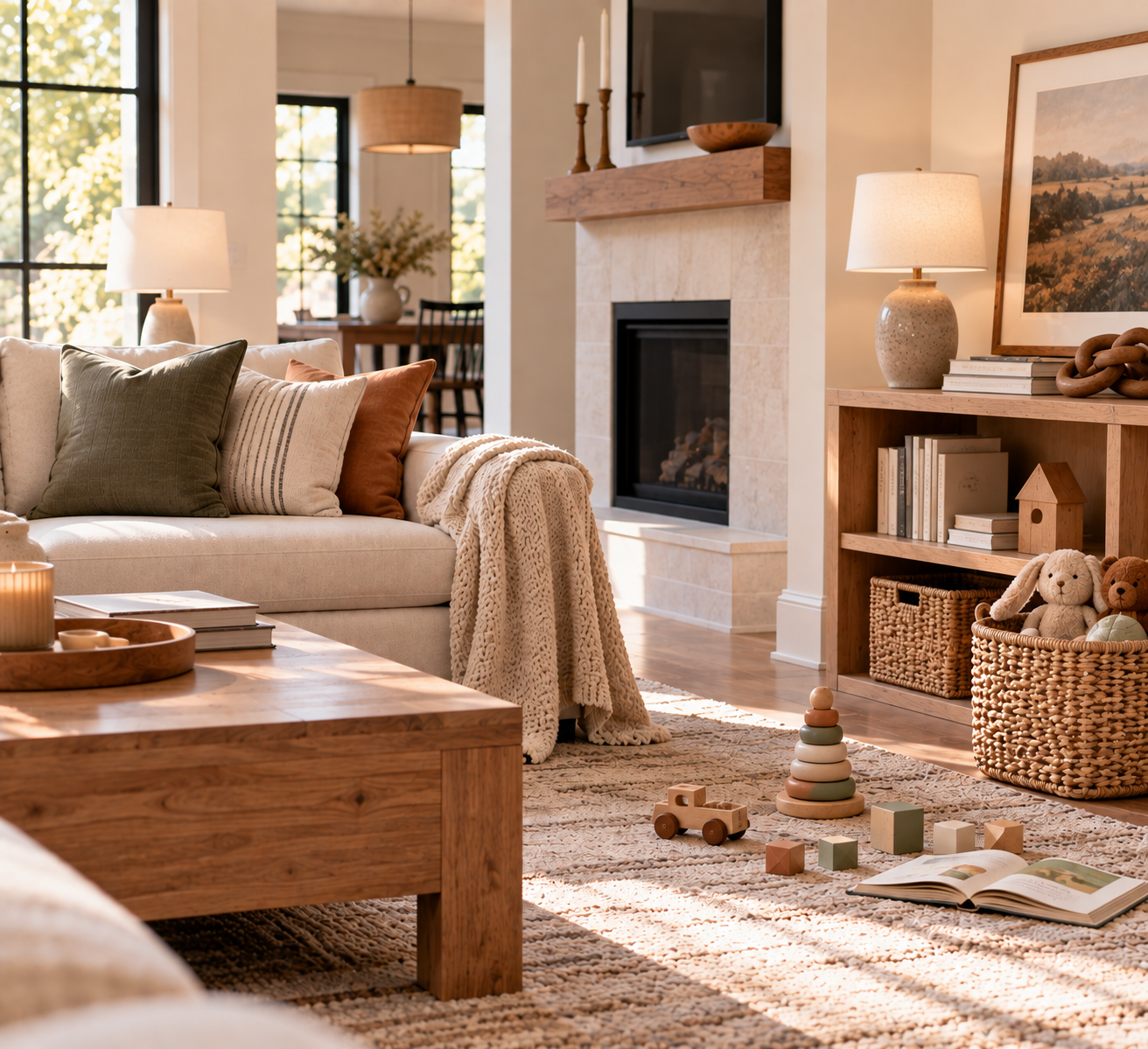
Toy storage works best when putting things away is almost as easy as taking them out.
Instead of complicated systems with lots of tiny categories, use a few simple places your child can easily reach. A low basket for stuffed animals, a bin for blocks, or a shelf for favorite toys may be all you need.
You can still choose storage that feels at home with the rest of your space. Woven baskets, simple wood shelving, and neutral or softly colored bins can hold plenty of kid things without making the entire room feel like a playroom.
Why it works: When children can see where things belong and reach those places themselves, cleanup becomes easier for everyone—and eventually something they can begin helping with, too.
4. Keep Fewer Toys Out at One Time
More toys don't necessarily mean more play. When everything is available at once, a room can become overwhelming surprisingly quickly—for kids and adults.
Try keeping a smaller selection of toys accessible and storing some of the others elsewhere. Every so often, swap a few things out. Toys that haven't been seen for a while can suddenly feel interesting again without anything new coming into the house.
This doesn't need to become a complicated toy-rotation system. Even moving a handful of less-used toys out of the main living area can make a noticeable difference.
Why it works: Fewer choices can make play spaces easier to use, easier to reset, and much easier to live alongside.
5. Create One Easy Place for Mealtime Essentials
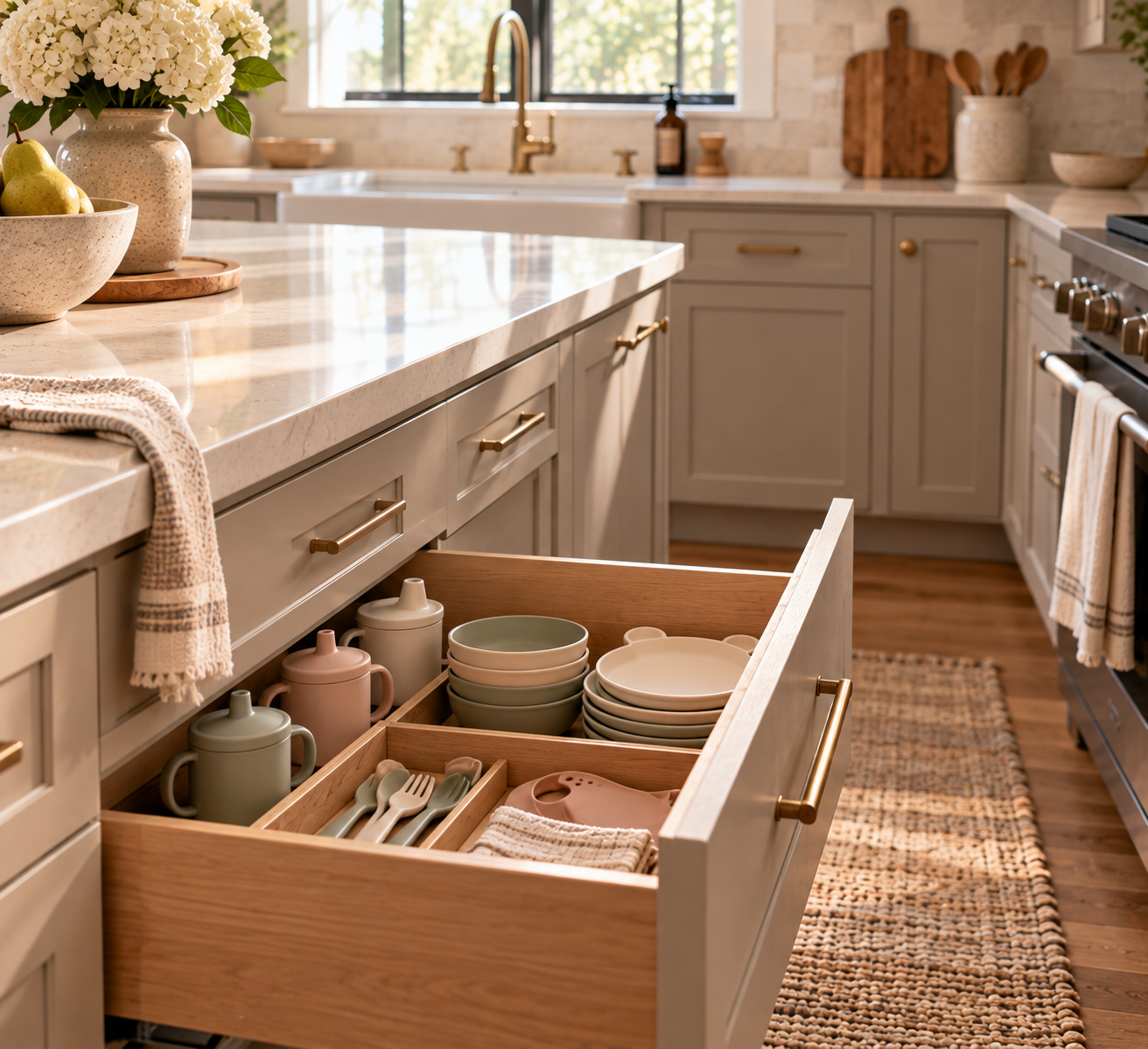
Mealtimes with little kids involve a surprising number of little things—cups, bibs, plates, bowls, utensils, wipes, and whatever else seems to be needed the moment everyone sits down.
Instead of storing these items wherever they happen to fit, consider giving the things you use most often one easy-to-reach area near where meals are prepared or served.
That might be one kitchen drawer for kid-friendly dishes and utensils, a small section of a cabinet for cups, or a designated spot for bibs and cleanup essentials.
As children get older, keeping some appropriate items within their reach can also give them opportunities to help with simple routines like getting their own cup or putting something away.
Why it works: Keeping frequently used mealtime essentials together means less searching and fewer trips around the kitchen during an already busy part of the day.
6. Give the Things That Travel a Ready-to-Go Home
Some family essentials rarely stay in one place. Diaper-bag supplies, sunscreen, hats, wipes, snacks, water bottles, and other everyday necessities are constantly moving between the house and wherever you're headed next.
Give these items a predictable home near the place where you prepare to leave. It might be one drawer, a cabinet near the entry, or a designated section of a closet.
When you come home, return those essentials to the same place so they're ready for the next outing instead of scattered between bags, cars, and rooms.
Why it works: Getting out the door becomes easier when the things that leave the house with you already have a home near the exit.
7. Make Cleanup Part of the Space
Little kids create little messes all day long. Crumbs after snacks, spills at the table, toys across the floor, and fingerprints in places you didn't know fingerprints could reach.
Instead of keeping every cleanup item hidden in one central location, think about where the messes actually happen. A small stack of washable cloths near the kitchen, an easy-to-reach hand towel in the bathroom, or a simple place for quick cleanup supplies can make handling everyday messes much easier.
As children get older, you can also keep safe, age-appropriate cleanup items within their reach so they can begin helping with simple spills and messes.
Why it works: When cleanup is easy to start, small messes are less likely to become bigger ones—and caring for the home can gradually become something the whole family participates in.
8. Leave a Little Room for Childhood
A family home doesn't need to look as though children don't live there.
The tiny shoes by the door, a favorite stuffed animal on the sofa, a few toys in the living room, or a child's artwork displayed somewhere you love aren't necessarily clutter. They're evidence of the life happening inside your home.
The goal isn't to hide every sign of childhood. It's to give those things enough structure that your home can still feel calm and beautiful while making room for the people who live there.
Why it works: When you stop trying to make family life invisible, you can focus on creating systems that support it instead.
A Beautiful Home Can Still Be a Family Home
Creating a home that works with little kids doesn't mean giving every room over to toys, plastic bins, and children's furniture.
And it doesn't mean constantly trying to make your home look as though no children live there, either.
There's a comfortable place somewhere in between—a home where little people can reach what they need, everyday routines have simple systems, and the things that come with family life have places to belong.
Some days, there will still be toys on the floor and cups on the counter. That's real life.
A home doesn't have to be perfect to be beautiful. It just needs to work for the people growing inside it.
